When we see “sugar-free,” we often assume it automatically means a healthier choice. But biology doesn’t think in marketing terms—it thinks in metabolic pathways.
A recent study in zebrafish puts the spotlight on sorbitol (a sugar alcohol commonly used as a sweetener) and highlights something we sometimes forget: whether a compound stays “neutral” can depend a lot on what’s happening in the gut microbiome.
🦠 Why the microbiome matters as a metabolic “gatekeeper”
Your gut bacteria aren’t passive passengers. They constantly interact with what you eat—and with what your body produces—often before those substances ever reach the liver. That’s the core idea here: under normal conditions, certain gut bacteria can break down sorbitol in the intestine, reducing how much of it travels onward.
🐟 What the researchers did?
In this study, researchers worked with adult zebrafish and created a condition where the gut microbiome was depleted (using an antimicrobial/antibiotic cocktail). Then they looked at what happened to metabolism and liver health—even when the fish were on a standard diet. They combined metabolomics and isotope tracing (a way to track where nutrients go in the body) to map the pathway in detail.
🧩 What they found?
1) The body can produce sorbitol from glucose (in the intestine)
The study found that dietary glucose can be converted into sorbitol within intestinal cells. Therefore, sorbitol is not only obtained exogenously—it can also be produced endogenously under certain conditions.
2) Under normal conditions, bacteria metabolize sorbitol
In control animals, the resident microbiota efficiently degraded sorbitol in the intestine, preventing its accumulation and associated effects.
3) In the absence of the microbiome, sorbitol reaches the liver
When beneficial bacteria were depleted, sorbitol was transported to the liver. There, it was further metabolized into intermediates associated with fructose metabolism (the study specifically traces the pathway via fructose-1-phosphate), which was linked to a metabolic shift toward increased lipid synthesis and storage in the liver.
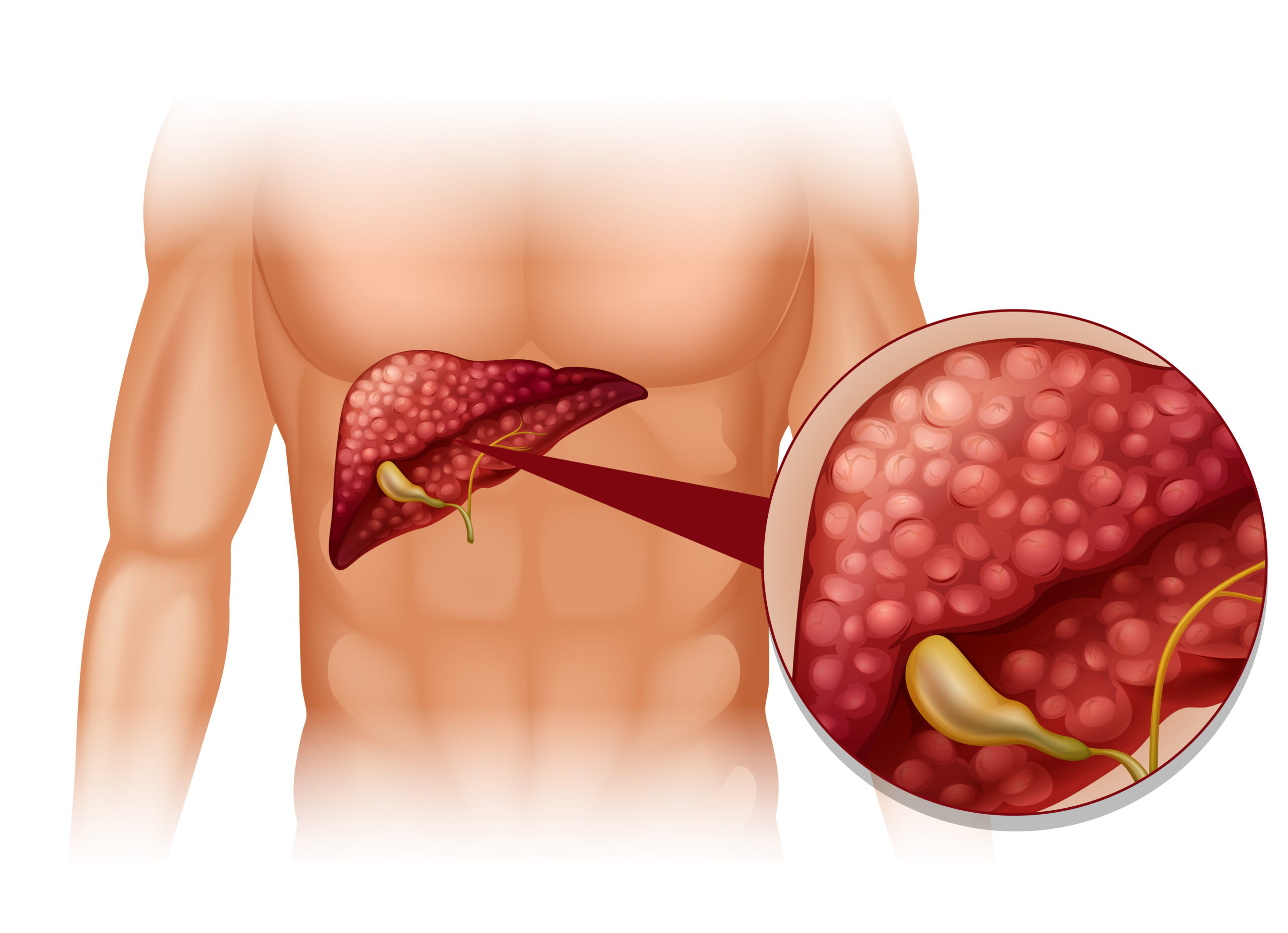
4) The liver begins to accumulate more fat (steatosis)
Under these conditions, the animals developed hepatic steatosis (fatty liver), and notably, this occurred within a relatively short time frame in the experimental model.
5) Inhibiting sorbitol production prevents steatosis
When the formation of sorbitol in the intestine was inhibited, it was sufficient to prevent the development of steatosis in microbiome-depleted conditions.
6) Restoring sorbitol-degrading bacteria protects the liver
Recolonization of the gut with sorbitol-degrading bacteria (Aeromonas strains) mitigated or prevented steatosis, further supporting the protective role of the microbiome.
7) High sorbitol intake induces steatosis even without antibiotics
An additional key finding was that administering high concentrations of sorbitol mimicked the effects of microbiome depletion and led to steatosis. This suggests that, under conditions of excessive sorbitol load, the system can become overwhelmed.
⚖ Important limitations (science-fair, not fear-based)
- This is a zebrafish study. It’s excellent for exploring mechanisms, but it’s not the same as a human clinical trial.
- The model involves strong microbiome disruption (not a typical everyday scenario).
- The sorbitol effect was shown with high concentrations, so it would be unfair to conclude that “any sugar-free gum causes fatty liver.”
Source: Madelyn M. Jackstadt, Ronald Fowle-Grider, Mun-Gu Song, Matthew H. Ward, Madison Barr, Kevin Cho, Hector H. Palacios, Samuel Klein, Leah P. Shriver, Gary J. Patti. Intestine-derived sorbitol drives steatotic liver disease in the absence of gut bacteria. Science Signaling, 2025; 18 (910) DOI: 10.1126/scisignal.adt3549
💚 THE HEALTH FORMULA – prevention and healing begins with understanding
In The HEALTH FORMULA the goal is never to fear a single ingredient—it’s to understand context:
- Your microbiome is a metabolic ally—support it with real food diversity, fiber, and steady routines.
- “Sugar-free” isn’t automatically a free pass—especially if sweeteners become a daily, high-volume habit.
- The liver loves consistency: fewer ultra-processed “substitutes,” more simple food, movement, and sleep.
In short: we focus on the “why”—so we can choose the “what” wisely.