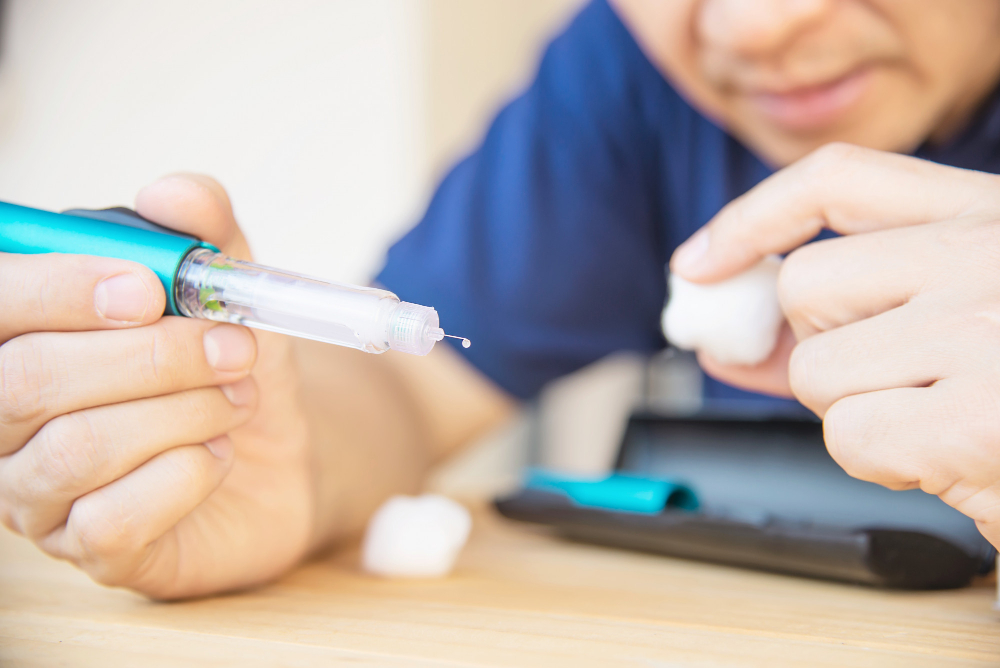
Ozempic (semaglutide) has become one of the most sought-after drugs of our time – moving from diabetes management into the worlds of aesthetics and obesity treatment, thanks to its remarkable weight-loss effects. But do the numbers on the scale tell the whole story?
What Does the Science Say?
Drugs from the GLP-1 receptor agonist class, such as semaglutide, represent a major breakthrough in obesity therapy. However, concerns have emerged: does this type of weight loss come at the expense of muscle mass and strength?
In the large STEP-1 clinical trial, patients who used semaglutide lost an average of 15,3 kg, but also shed 6.9 kg of lean mass. That means nearly 45% of total weight loss came from lean tissue – much higher than the so-called “quarter fat-free mass rule”.
Key questions remain:
- How much of this lean mass loss comes directly from skeletal muscles?
- How much is simply a “return to baseline,” since obesity itself artificially increases muscle and organ size?
- Most importantly – what happens to muscle strength? Because size and strength don’t always match.
New Research – Size vs. Strength
A recent University of Utah study in mice added another twist. While muscle size didn’t decrease dramatically, in some cases the muscles still lost strength – their force-generating capacity was reduced. In other words, muscles may look the same on the outside, but function less effectively.
This is particularly concerning for older adults, already at risk of sarcopenia, declining muscle strength, and higher susceptibility to falls. Researchers emphasize that future clinical trials must measure not only body weight and lean mass, but also muscle function.
Should We Worry?
Not yet. There’s no evidence that these exact effects occur in humans at the same scale. These findings are early warnings and hypotheses that require further clinical testing. But the message is clear: losing weight is not always the same as gaining health.
Practical Takeaways
If you are using or considering weight-loss medications, it’s important to:
- Always consult with your physician.
- Don’t rely on the drug alone – include physical activity, especially strength training..
- Vodite računa o Maintain a diet rich in protein and micronutrients..
Conclusion:
Ozempic is a revolutionary tool in the fight against obesity, but it also reminds us that the number on the scale is not the only measure of health. Strength, vitality, and mobility are equally important for long and healthy living. Weight loss should never come at the expense of life energy.
Source: Karasawa, Takuya et al. Cell Metabolism, Volume 37, Issue 8, 1619 – 1620. Unexpected effects of semaglutide on skeletal muscle mass and force-generating capacity in mice.
That’s why we always return to THE HEALTH FORMULA – a balance of nutrition, physical activity, quality sleep, stress management, and targeted supplementation. True success lies not only in shedding pounds, but in preserving strength and vitality.
Vitality knows no age when health is guided by knowledge!